
Welcome to Powai
Tucked into the north-eastern edge of Mumbai, Powai is a suburb built around a lake, a lecture hall, and a lot of ambition — home to India's top engineering institute, a booming IT and startup scene, and a lifestyle that mixes lakeside calm with big-city convenience.
A Brief History
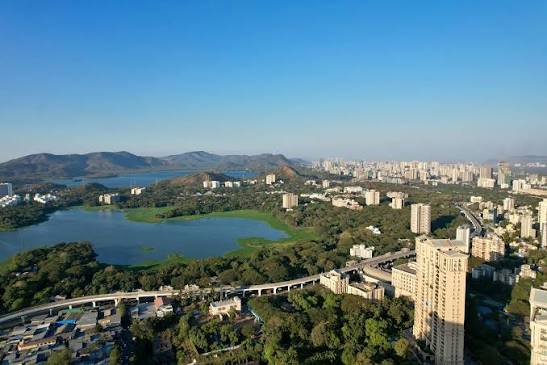
Powai's story starts with water. In 1891, British colonial authorities dammed a tributary of the Mithi River, creating Powai Lake to help supply drinking water to Bombay. The plan didn't last — within a couple of years the water was ruled unfit to drink due to silt and pollution — but the lake stayed, and it eventually became the anchor around which the whole neighbourhood took shape.
The name itself traces back to the old Powai Estate, once held by Framji Kavasji, a prominent figure in Bombay's Agricultural and Horticultural Society in the early 1800s. Long before the high-rises, this was Powai Valley — a scattering of small villages where each home drew water from its own well.
In 1943, four years before India's independence, freedom fighters Chandrabhan Sharma and Ram Nath Grover leased and later bought the Powai Estate for a modest sum. At the time, the area comprised five distinct villages: Saki, Kopri, Tirandaz, Powai, and Paspauli, set amid open agricultural land.
The turning point came in the late 1950s, when a portion of Powai was allotted to the government to establish the Indian Institute of Technology Bombay — India's second IIT, and the institution that would come to define the area's identity. Around the same time, Powai became an early industrial base too: a young Danish engineer, Søren Kristian Toubro, secured a major contract in the city and leased vast tracts of Powai land to set up what would grow into Larsen & Toubro.
Real transformation followed in the 1980s, when the Hiranandani Group acquired large tracts of land between the lake and the surrounding hills and converted them into a planned residential township — laying the foundation for the modern, high-rise Powai residents know today.
Powai Lake itself remains a local landmark: an artificial lake spread across roughly 160 hectares, capable of holding over 5,400 million litres of water at full capacity, bordered by IIT Bombay on one side and the Hiranandani township on the other. Inside the IIT campus, on the lake's bank, sits the Padmavati Devi Temple — dated by the Archaeological Survey of India to as far back as the 10th century, making it one of the oldest structures in the entire neighbourhood. The lake still draws walkers, joggers, and birdwatchers to its promenade today, especially at sunset.
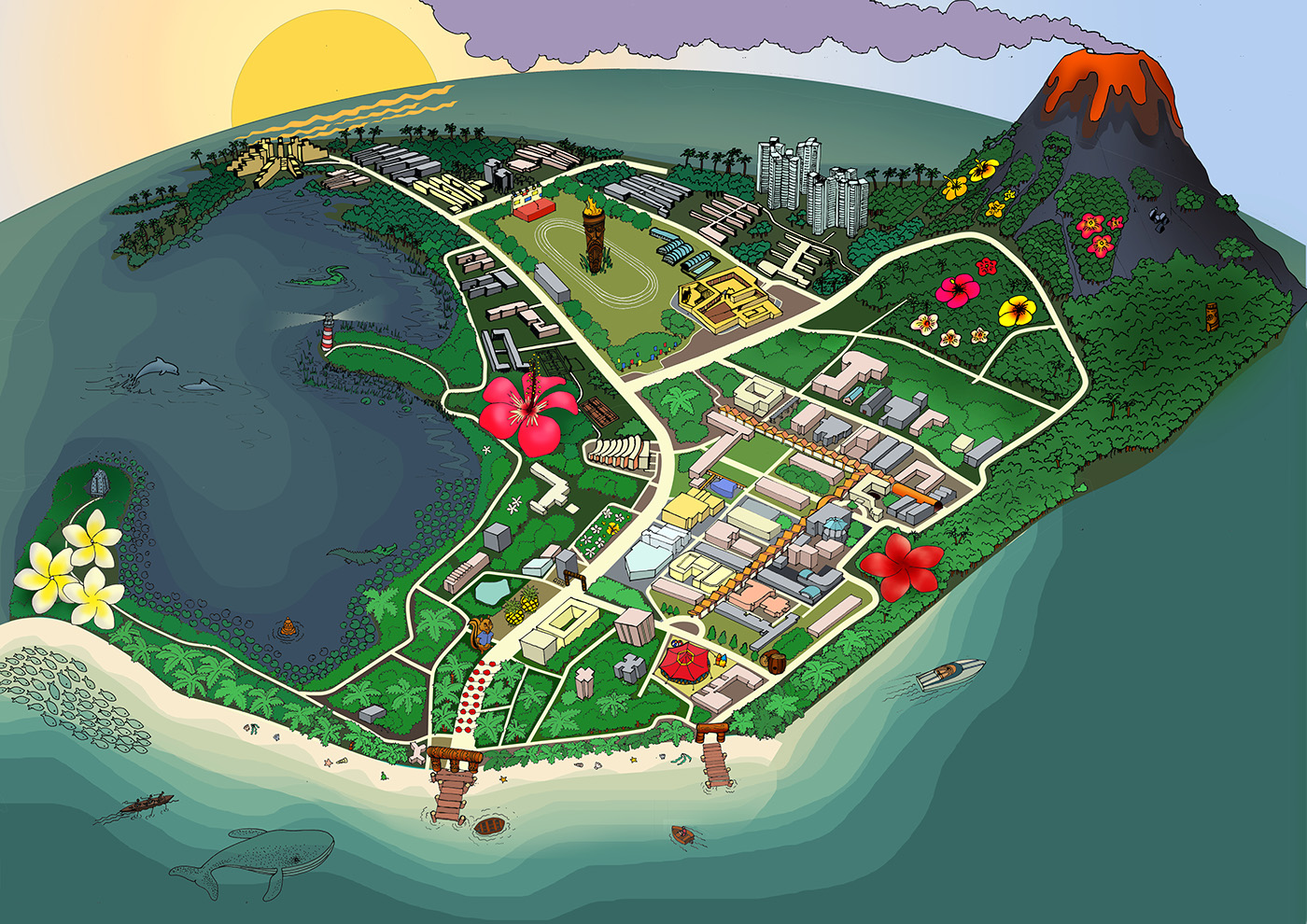
IIT Bombay campus, on the eastern bank of Powai Lake
The Local Pulse
Powai wears two hats comfortably. By day, it's a serious business address — home to the Hiranandani Business Park, a Special Economic Zone, and offices for IT firms, BPOs, and global names alike, drawing a steady stream of tech and corporate professionals. Large-scale investment continues to reshape the skyline too, with major global capability centre projects announced for the area in recent years.
By evening and on weekends, Powai shifts gears — lakeside walks, a dense cluster of cafes and restaurants, malls like Hiranandani Galleria, and a young, cosmopolitan crowd shaped heavily by the IIT Bombay student population and the many professionals who've chosen to settle here. It's dense, it's diverse, and it has a distinct identity within Mumbai — more planned and greener than most of the city, but still unmistakably part of its energy.
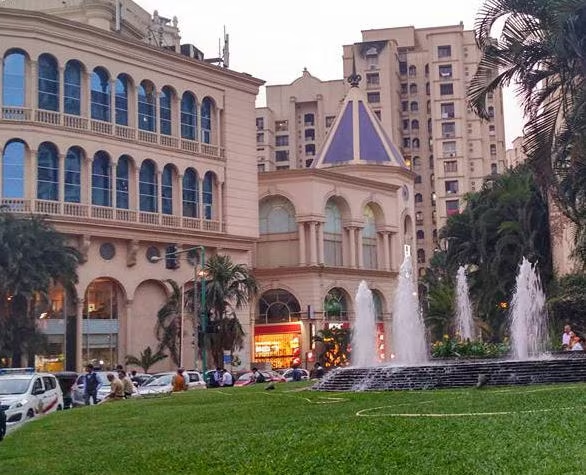
Hiranandani Gardens — the residential and retail heart of Powai
Location & How to Reach Powai
Powai sits in Mumbai's northeastern suburbs, wrapped around Powai Lake, with Vikhroli Parksite to the south-east, Chandivali to the south-west, and the Sanjay Gandhi National Park just across the lake to the north. It's connected to the rest of the city via the Jogeshwari–Vikhroli Link Road (JVLR) — one of Mumbai's busiest east-west connectors — as well as LBS Marg and the Eastern and Western Express Highways.
By Air
Chhatrapati Shivaji Maharaj International Airport is about 5–7 km away, roughly 15–20 minutes by road depending on traffic.
By Rail
Nearest suburban stations are Vikhroli and Kanjurmarg on the Central Line, a short auto or cab ride from most parts of Powai.
By Road
JVLR connects Powai directly to the Western Express Highway and the Eastern Express Highway, making commuting across the city easy.
Upcoming
Mumbai Metro Line 6 will further improve connectivity to key business districts once operational.
Ready to Explore Powai for Yourself?
From lakeside events and local activities to real estate listings and neighbourhood insights — everything you need to live, explore, or invest in Powai is right here.